What is Samhain in Irish Tradition?
Oct 29, 2025
Samhain is one of the four great fire festivals of the Irish calendar which together make a complete wheel of the year, and it's also one of the most misunderstood.
The name is Irish Gaeilge, pronounced roughly 'SOW-in' (rhyming with 'cow-in'), and it marks the end of the harvest season and the beginning of the dark half of the year, falling at the end of October and the start of November.
It's genuinely ancient, appearing in early medieval Irish texts including the Ulster Cycle tales, where it functions as a liminal time, a threshold period when the boundary between this world and the otherworld was considered thin.
This was a time associated with the sidhe (the otherworld mounds), with the return of the dead, with supernatural encounters, and with communal feasting and ritual.
It was also a time for great assemblies, occasions at which tribes would meet, disputes were settled, and the business of the community was conducted. The feast of Tlachtga (associated with the Hill of Ward in County Meath) and the great assembly at Tara are both connected to Samhain in the texts.
Is Samhain the same as Halloween?
They share a date for sure, but not a simple direct lineage.
Halloween developed through a mixture of Christian observance (All Saints' Day on November 1st), European folk customs, and later American cultural development - that's where the pumpkins and bats come in.
The Irish tradition of Samhain predates Christianity in Ireland and has its own distinct character in the native sources.
The mix up is understandable but worth untangling, particularly because it leads people to project modern Halloween imagery back onto ancient Irish practice, where it doesn't belong.
What about the bonfire tradition?
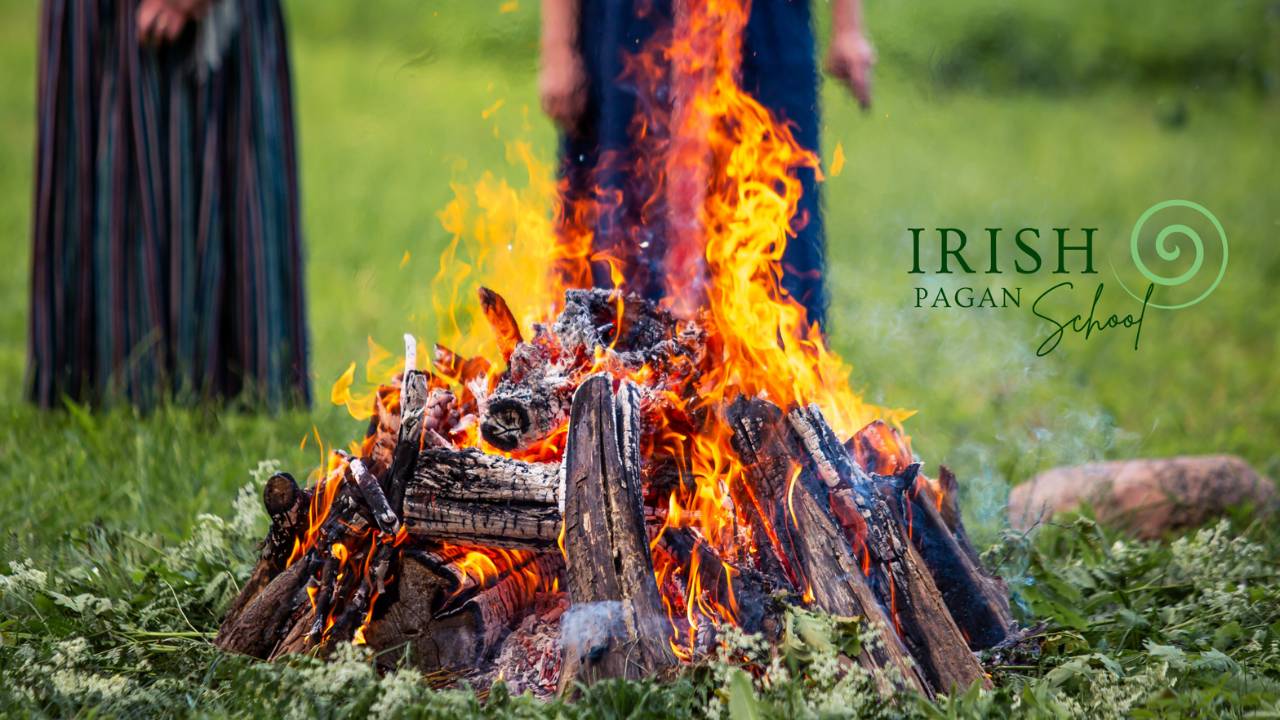
The bonfire tradition associated with Samhain is real and thoroughly attested in Irish folk custom, and the practice of lighting fires at this time of year has deep roots in the calendar tradition.
How far it extends continuously back into pre-Christian practice is a question scholars continue to examine, but it's definitely not a recent invention.
How do contemporary Irish Pagans observe Samhain?
For many contemporary Irish Pagan practitioners, Samhain is a time for honouring the ancestors, for acknowledging the dead, for sitting with what the year has held, and for recognising the seasonal turning in the landscape.
In Ireland, that turning is real and felt: the light is changing, the land is quieting, and the practices that fit this time of year grow naturally from that reality.
It's grounded in the Irish sources and in the land, not in the broader NeoPagan 'Wheel of the Year' 8 festivals framework, which is a different thing almost entirely... though Gerald Gardener et all did plunder Irish and other 'Celtic' cultures to create Wicca, as colonisers are wont to do.
The 3 Pillars of Contemporary Irish Paganism is a free 3-day email course that covers the core principles of the tradition, written and taught by native practitioners in Ireland, and it's the right place to start your path. ➡️ Sign up Here.
Stay connected with news and updates!
Join our mailing list to receive the latest news and updates from our team.
Don't worry, your information will not be shared.
We hate SPAM. We will never sell your information, for any reason.