What is Imbolc in Irish Tradition?
Jan 28, 2026
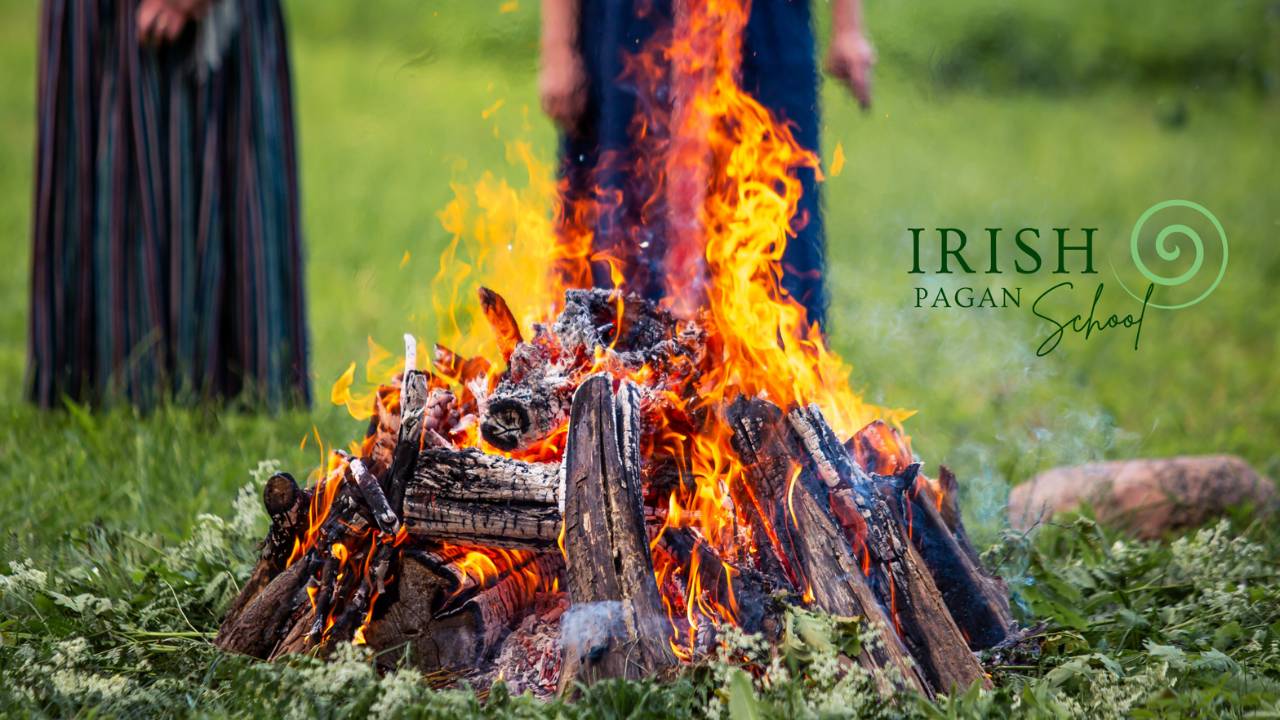
Imbolc (also Imbolg) is one of the four great fire festivals of the Irish calendar, falling at the start of February, midway between the winter solstice and the spring equinox.
The name is thought to derive from Old Irish, with the most widely accepted interpretation relating to the lactation of ewes (oimelc) but may have been from washing (root: folc) or birth (root:bolg). This festival is a a practical marker of early spring and the beginning of the season of new growth in Ireland.
It's a seasonal feast in the most grounded sense: tied to the land, to the animals, and to the actual change in light quality and many tasks moving from indoor to outdoor again, that anyone living in Ireland will notice in early February.
Brigid and Imbolc
Brigid (also Brighid, Bríd) is the figure most strongly associated with Imbolc, and she's one of the most significant in all of Irish tradition. In the mythology, she appears as a member of the Tuatha De Danann and daughter of the Dagda, and she's associated with poetry, healing, and smithcraft.
In Christian Ireland, she became Saint Brigid of Kildare, one of the three patron saints of Ireland, with her feast day falling on February 1st, precisely at Imbolc.
This overlap isn't a coincidence, and it's also not a simple case of the Church co-opting a pagan festival. The relationship between the mythological Brigid and the historical or hagiographic Saint Brigid is genuinely complex, and scholars continue to work on it.
What we can say with confidence is that this date/season has been significant in the Irish calendar for a very long time, and Brigid sits at its heart.
The Brigid's Cross
The Brigid's Cross, woven from rushes, is one of the most recognisable symbols associated with this time of year in Irish folk tradition. The practice of making and placing them for household protection is well-documented in Irish folklore and is still practised across Ireland.

It's one of the clearest examples of a folk custom that bridges the pre-Christian and Christian layers of Irish culture without requiring you to choose between them.
How is Imbolc observed today?
For contemporary Irish Pagans, Imbolc is a time for acknowledging the returning light, for working with Brigid in whichever form feels authentic to your practice, and for attending to the actual seasonal shift in the landscape around you, as well as for yourself and your own home. Time for a Spring Clean, perhaps?
In Ireland, that shift is real and felt: snowdrops are coming up, the birds are changing their behaviour, and the quality of the morning light is genuinely different from December.
The festival is observed differently by different practitioners, and that variety is part of a living tradition.
What grounds it is connection to the actual Irish sources and to the land, not to a generic 'Wheel of the Year' of the NeoPagan traditions.
🔥 For a curated collection of authentic Irish Imbolc Fire Festival Resources ➡️ Click Right Here.
Stay connected with news and updates!
Join our mailing list to receive the latest news and updates from our team.
Don't worry, your information will not be shared.
We hate SPAM. We will never sell your information, for any reason.